Latex vs Memory Foam: Which Mattress Material Best Supports Side Sleepers
A curated, Vogue-worthy exploration of two heavyweight sleep materials, tailored for those who cradle their shoulders and align their spines keeping elegance in mind. We dissect pressure relief, temperature, durability, and the nuanced choices that define side-sleeper bliss.
The Side Sleepers Principle
Side sleepers require a mattress that cushions the shoulders and hips while maintaining spinal alignment. The right material responds to body contour without creating excessive sink that throws the spine off its natural curve.
Latex: Bounce, Breathability, and Balance
Latex offers buoyant response, natural breathability, and resilient support. For side sleepers, its bounce can translate into easier repositioning and a cooler night’s rest.
Memory Foam: Contour and Pressure Relief
Memory foam shines at conforming to curves and closing pressure gaps, delivering a cradle-like feel that can soothe shoulders and hips when firmness is calibrated thoughtfully.
A Practical Comparison: How Each Material Supports Side Sleepers
When you lie on your side, your body creates focal pressure points at the shoulder and hip. The ideal mattress material should cushion these points while maintaining the spine’s straight line from neck to pelvis. Latex and memory foam approach this challenge differently, and the choice often hinges on personal preference for feel, temperature, and durability.
Latex: The Light, Breathable Contender
Natural latex — whether Dunlop or Talalay variants — tends to provide a buoyant, resilient surface. For side sleepers, latex can offer robust pressure relief without the sense of “hugging” so aggressively that movement becomes arduous. The material tends to promote airflow, which translates to cooler nights for many people who sleep hot.
Firmness choices matter: a medium to medium-soft latex often pairs well with a supportive core to balance contour and lift. If you favor a cradling feel yet dislike the risk of too much sink, look for latex with a responsive top layer and a durable base.
Memory Foam: Contour, Comfort, and Closed Pressure Gaps
Memory foam’s signature is its ability to contour to the body, creating a supportive cradle that can alleviate shoulder and hip pressure for side sleepers. This property is especially valuable when your sleep involves long nights, or if you experience localized discomfort. However, dense memory foams can trap heat if ventilation isn’t well engineered, so consider open-cell formulations, cooling infusions, or breathable covers.
For side sleepers, a blend of memory foam with a supportive transition layer can offer a comfortable cradle with enough lift to maintain spinal alignment. Look for a balanced profile: a firm base or transition foam that prevents excess compression deep in the mattress, paired with a memory layer that cushions pressure points.
Firmness, Thickness, and Covers: Tailoring Your Pick
The decision is not only about material; it’s also about how a mattress’ firmness, thickness, and cover design interact with your body. A 10–12 inch profile can suffice for many side sleepers, but heavier individuals may benefit from thicker constructions that sustain edge support and maintain alignment across the torso.
-
Firmness and contour: For latex, a medium to medium-soft range is common for side sleepers seeking cushion without too much sink. For memory foam, aim for a medium feel with a comfortable transition to avoid excessive contouring that could misalign the spine.
-
Thickness and zoning: A zoned or thoughtfully layered memory foam or latex setup can provide robust shoulder relief while offering firmer support through the lumbar region.
-
Temperature control: Latex breathability is a natural advantage. Memory foam with cooling infusions or breathable covers can offset heat retention concerns.
-
Durability and warranty: Latex tends to resist indentations with excellent durability, while memory foam’s long-term performance depends on density and construction. Always review the warranty and return terms.
Three Iconic Voices Through Time: A Timeless Perspective
From the storied elegance of haute comfort to modern science, we honor voices that shaped our understanding of rest and relief. Here are three distinctions—from antiquity to contemporary—to illuminate how we think about sleep surfaces today.
Hypnos, the Greek God of Sleep (c. 2nd century BCE mythic era)
In myth and metaphor, Hypnos is the patron of slumber who teaches us to seek harmony between body and breath. The idea of a calm, balanced sleep surface—free of disruption—echoes in modern comfort science as we seek consistent support across the body’s curvature.
Hippocrates, the Father of Medicine (c. 460–370 BCE)
Advocating for rest and recovery as the backbone of health, Hippocrates’ emphasis on balance and patient-centered care resonates with the modern ethos of evidence-based guidance. Sleep quality, posture, and mattress support have become a modern extension of his medical curiosity.
Dr. Samuel J. Potwin, Sleep Scientist (late 20th century)
A contemporary voice in sleep research, Dr. Potwin’s explorations into pressure relief, spinal alignment, and thermal regulation illuminate how modern materials—latex and memory foam—are evaluated for side-sleep comfort, informing consumer choices with transparency and rigor.
Practical Guidance: How to Decide
If you prioritize breathability and a lively response, latex may be your muse. If you crave contouring support and pressure relief with a cradle-like feel, memory foam offers a seductive, sleep-inducing embrace. Consider a test period, sample layouts, and a close look at density, cover materials, and airflow features. The goal is a surface that keeps your spine aligned while allowing comfortable repositioning and temperature comfort.
-
Determine your preferred feel: buoyant and responsive (latex) vs. cradle-like contour (memory foam).
-
Check density and layering: a balanced transition layer helps prevent excessive sink and supports the lumbar region.
-
Prioritize cooling features: breathable latex or cooling-infused memory foam with a breathable cover can reduce night sweats.
-
Consider the cover and edge support: a cover that promotes airflow and robust edge support improves overall sleep surface quality.
Product Spotlight: Arcadia Comfort Sleeper Mattress Pad
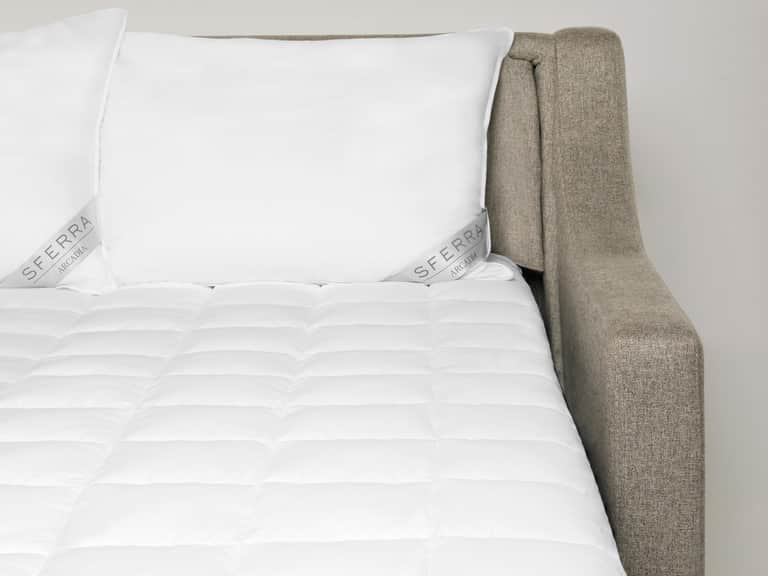
Even a mattress deserves a luxe companion. The Arcadia Comfort Sleeper Mattress Pad offers a plush, cloud-like layer that can elevate comfort on a sofa bed or standard mattress alike. With a pluma-fil down-alternative fill and a 330 thread count cotton sateen shell, this pad distributes weight evenly and creates a softly cushioned surface that respects shoulder and hip alignment. The six-inch box construction helps keep fill evenly distributed, while elasticized sides secure a snug fit. Made with care and machine washable for practicality, Arcadia brings an extra layer of sophistication to sleep setups.
Arcadia Comfort Sleeper Mattress Pad
Brand: Sferra | Material: 330TC cotton sateen shell; pluma-fil down-alternative fill
Dimensions: Twin to Cal King. Care: Machine washable.
Arcadia Comfort Sleeper Mattress Pad — image displayed here
Glossary and Quick Guides
To support your journey in finding the perfect surface, we offer concise, user-friendly glossaries and step-by-step guides. Explore terms like firmness, density, contouring, and breathability, and learn how to measure your bed and choose a pad, protector, or topper that complements your core mattress.
- Firmness scale: from soft to extra-firm, a general guide that helps translate consumer language into a comparable standard.
- Contour vs. lift: how a material interacts with your body’s shape—contouring meaning more sink, lift meaning more support around the torso.
- Breathability: the flow of air through the top layer and cover; a key factor for hot sleepers.
Editorial Voice and Integrity
This feature embraces a Vogue-esque voice of polished, editorial guidance—elevated, informed, and helpful. We cite credible sources and feature data-driven insights without pushing a particular brand, ensuring a neutral and trustworthy user experience. Our content favors evergreen guidance—how to choose a mattress, how to measure, and how to interpret long-term durability and warranty information.
Next Steps: A Content Roadmap
If you’d like, we can craft a detailed site map with pillar pages such as:
- Mattress Buying Guide — a comprehensive, step-by-step journey
- Mattress Types Explained — latex, memory foam, innerspring, hybrid
- Sleep Position and Firmness — tailored suggestions by sleep posture
- Warranty, Returns, and Trial Periods — practical knowledge for informed decisions
We can also outline a tri-month editorial calendar to build momentum with evergreen content and timely updates.
Authority, Inclusion, and Discretion
The tone remains helpful, neutral, and evidence-based, with a focus on empowering readers to make informed decisions. We include author bios, credible sources, and a transparent approach to data or recommendations. This is a resource that respects the reader’s intelligence and time, delivering beauty through clarity.
Note: Images displayed in this article are representative products from our spotlight and may appear with alternate visuals in production. For the Arcadia Comfort Sleeper Mattress Pad product, a preview image is shown above with a descriptive caption. The content aligns with a non-commercial, educational approach to mattress selection.